Anna's Story: Living With Scoliosis: Learning to Rebuild Movement and Reduce Pain
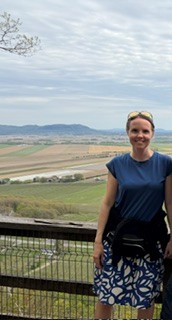
I have lived with scoliosis for more than thirty years. Although my scoliosis is currently considered mild, my experience with spinal imbalance has shaped nearly every aspect of how I understand movement, posture, pain, and the human body itself.
Looking back, I first began noticing changes in my posture during early adolescence. I started babysitting when I was around eleven years old and regularly carried young children before my own body was physically mature enough to do so comfortably. At the time, I instinctively shifted my posture and weight distribution to make carrying easier. I now believe those repetitive compensations contributed to long-term imbalances in my body as I grew.
As the years passed, my posture became increasingly asymmetrical. One side of my lower back curved inward to the point where I could no longer fully press that area against a wall. My shoulders became uneven, and I developed chronic muscular tension throughout my torso, ribs, hips, and back. Like many people living with scoliosis, I gradually normalized pain because it developed so slowly over time.
Growing up, I was often told to “stand up straight,” but nobody fully understood that my body could no longer organize itself normally. I interpreted posture as stiffness — locking my knees, straightening rigidly, and trying to force alignment through tension. I did not yet understand concepts like compensation patterns, biomechanics, gait, rib cage positioning, or nervous system adaptation.
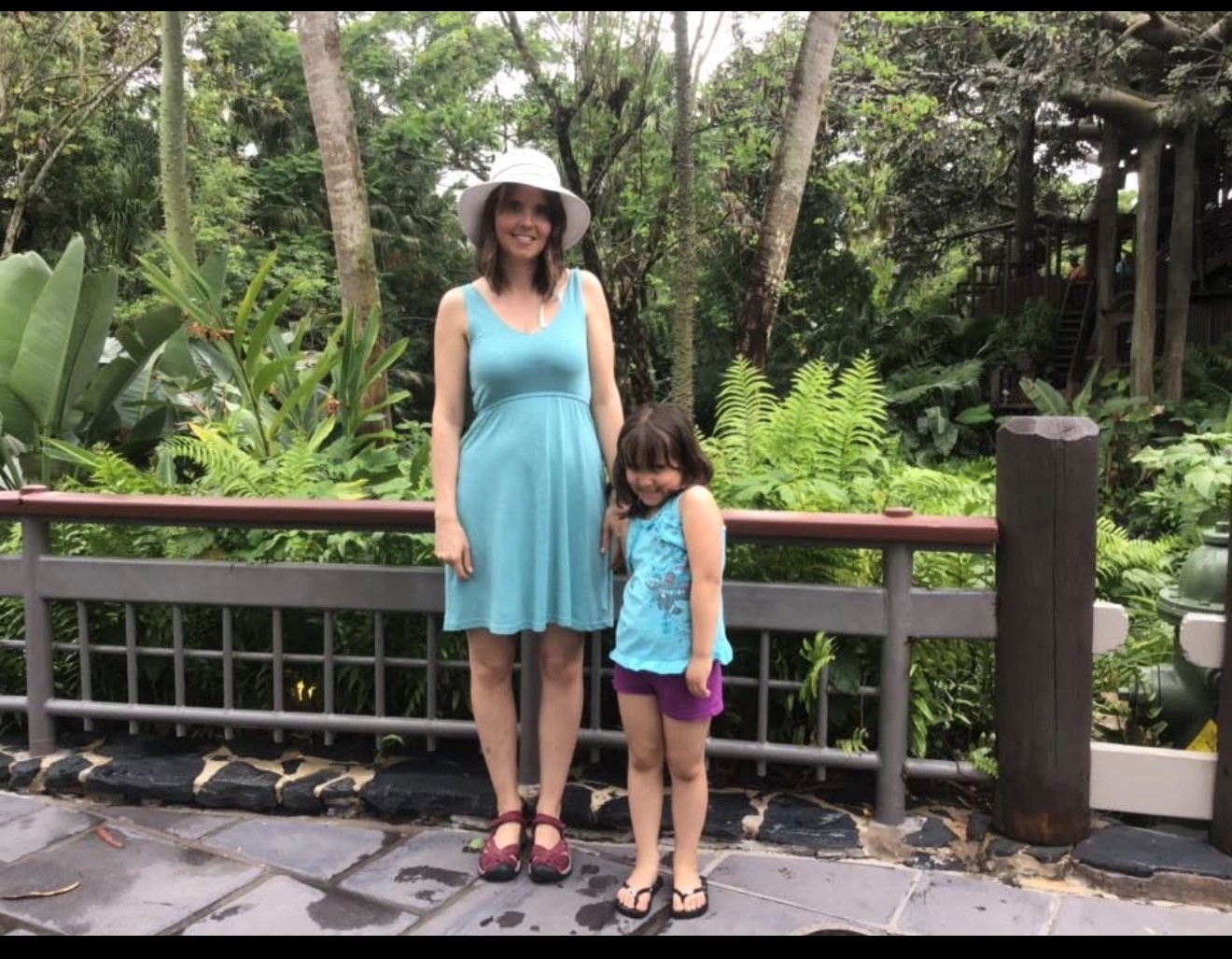
For many years, I managed my condition primarily through physiotherapy, chiropractic care, massage therapy, and self-developed coping strategies. Those approaches helped me remain functional, especially while working as a teacher, but deep down I still felt as though my body was constantly compensating.
One of the most difficult aspects of scoliosis was the nighttime pain. At times, I would wake up feeling as though a knife were jabbing into my back. Sleep became difficult because my body never truly relaxed. I also noticed limitations in movement patterns that other people seemed to perform naturally. Even exercises that appeared simple, such as dead bugs, were surprisingly difficult because I could not evenly organize my spine against the floor.
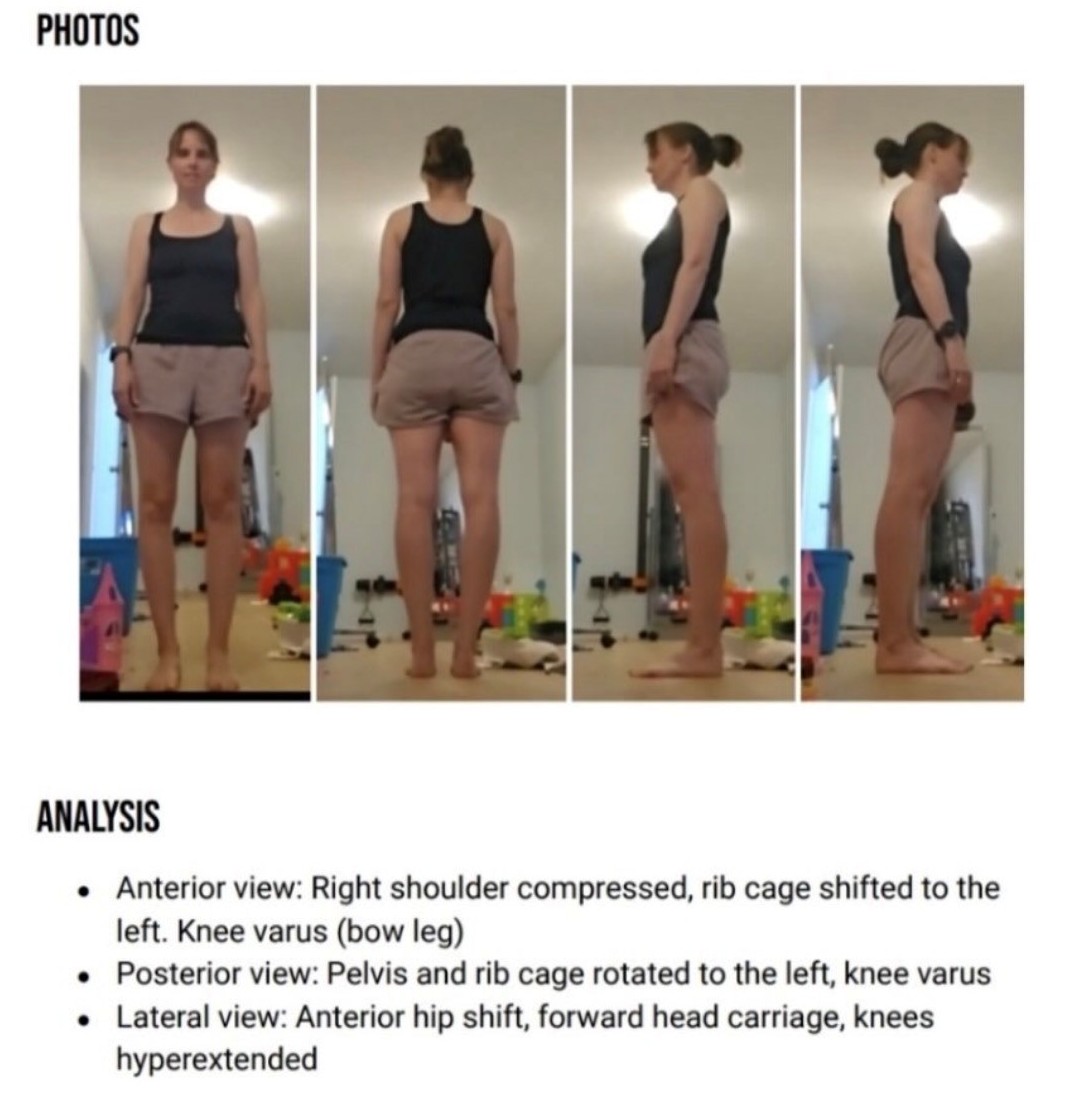
Several years ago, my chiropractor, Dr. Corinne Theriault of Epione Health in Cornwall, Ontario, suggested I explore Functional Patterns training as part of my rehabilitation journey. That recommendation ultimately became one of the most important turning points in my life.
At first, I enrolled in the online Functional Patterns course and became fascinated by its focus on biomechanics, posture, gait, breathing mechanics, and movement integration. However, because scoliosis creates such individualized compensation patterns, I quickly realized I needed one-to-one guidance to apply the concepts properly to my own body.
After searching extensively, I eventually connected virtually with Stephanie Bennett, one of the first Functional Patterns practitioners working in Canada. Working with her fundamentally changed how I understood posture and movement.
Rather than viewing posture as something rigid, Functional Patterns taught me to think about organization within the body — how the rib cage stacks over the pelvis, how breathing affects spinal positioning, how walking mechanics influence posture, and how asymmetrical tension patterns develop over decades.
One of the most powerful moments during my training occurred when Stephanie explained that I should slightly bend my knees and think about lengthening and organizing the spine upward rather than stiffening myself. That cue completely changed my understanding of posture. For the first time, posture felt dynamic rather than forced.
Over time, I became increasingly aware of how disconnected certain areas of my body had become. Stephanie pointed out that the lower left side of my back could not fully touch the wall. Through months of corrective movement work, breathing exercises, gait retraining, and postural awareness, I slowly began to regain better organization throughout my body.
I remember one particularly emotional moment while supervising yard duty at school. As I was walking, I suddenly felt areas along my spine and torso reorganizing in a way I had never experienced before. Shortly afterward, I experienced a dramatic release sensation in two areas near my spine that had felt compressed for decades. I could literally feel warmth and circulation rushing into those areas afterward.
Since then, I have experienced major improvements in pain management, posture awareness, breathing, and daily function. I can now stand against a wall with much more even spinal contact than before, and my shoulders are significantly more level than they once were.
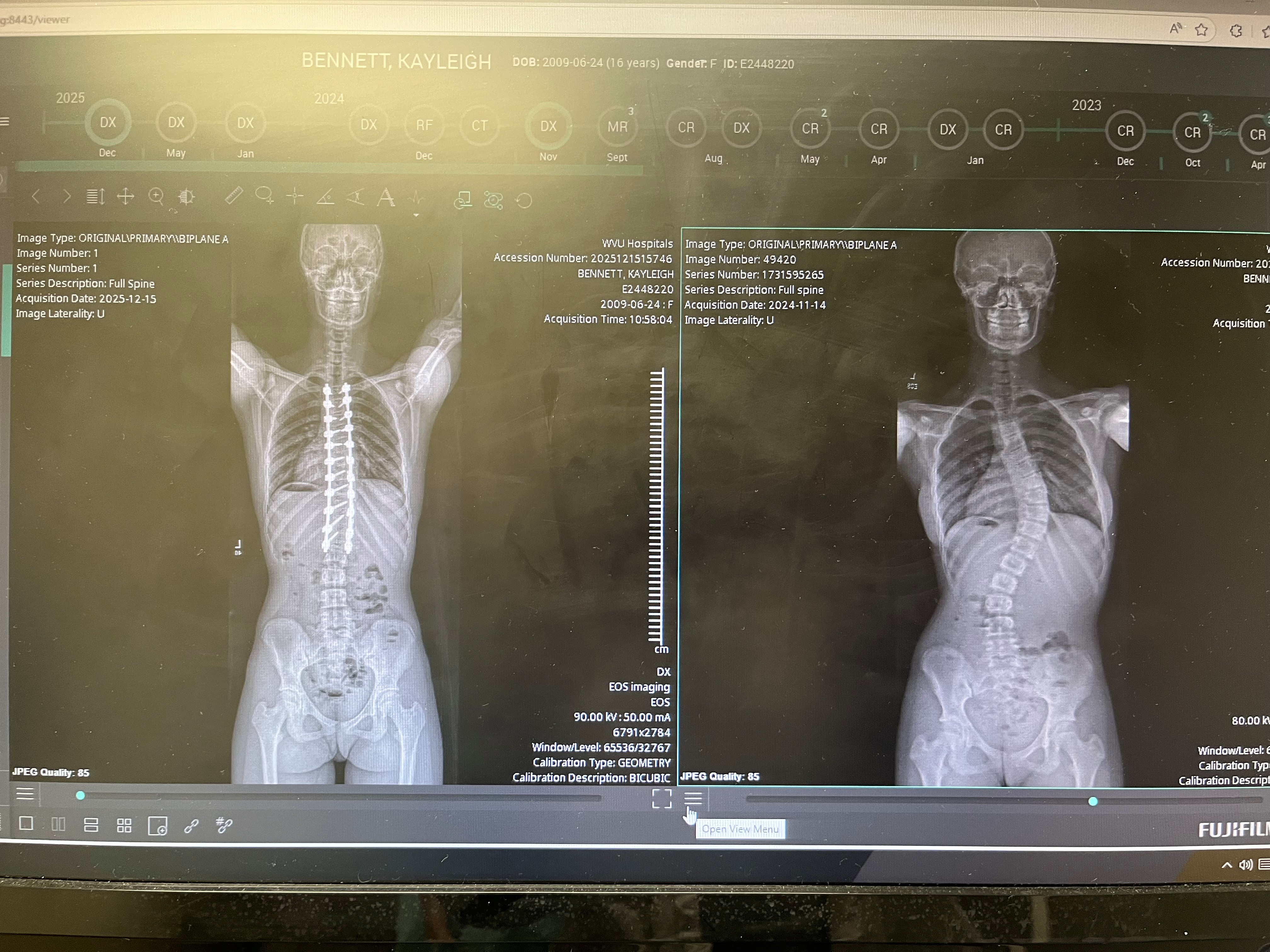
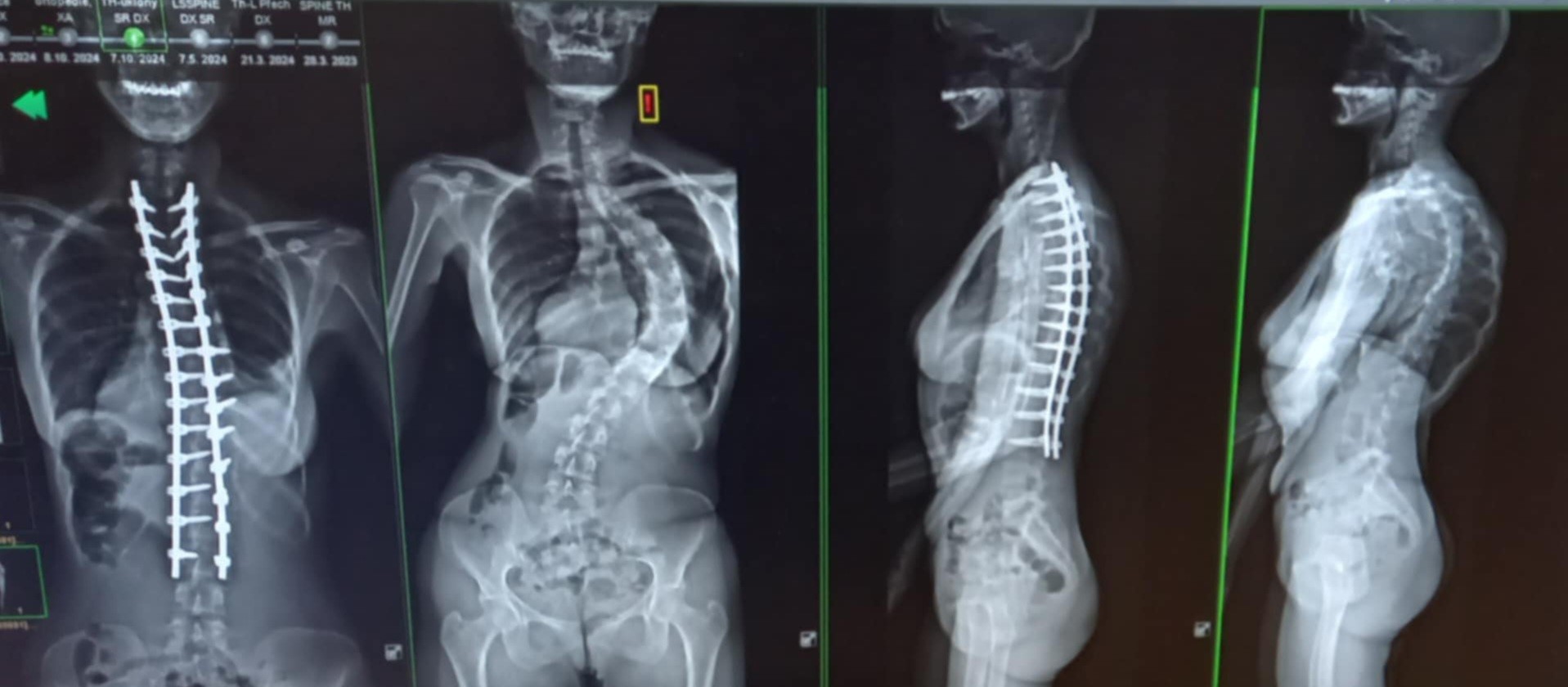
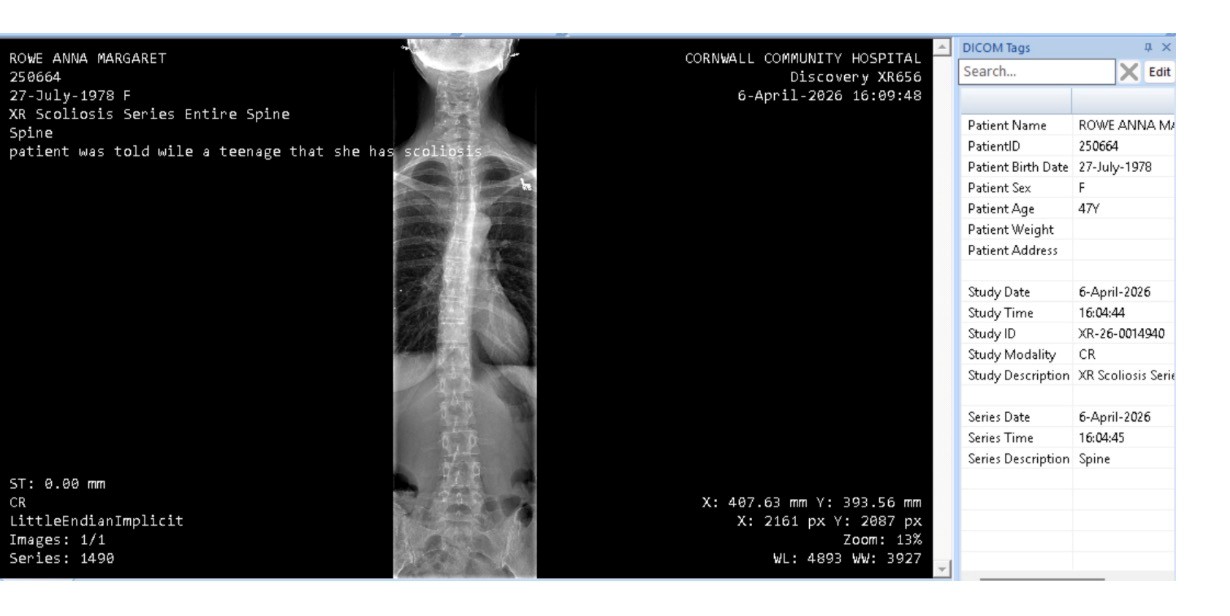
I want to be careful not to overstate what imaging can scientifically prove. In 2026, I obtained my first scoliosis X-rays as an adult after being encouraged to do so by David Butler of The Scoliosis Experience. Without earlier imaging for comparison, I understand that definitive conclusions regarding structural change cannot be made. However, what I can confidently say is that my quality of life, movement awareness, and pain management improved tremendously through multidisciplinary care and Functional Patterns training.
Functional Patterns also helped me understand something deeper: scoliosis is not simply about a spinal curve. It affects breathing, gait, muscular recruitment, balance, coordination, body awareness, and even emotional wellbeing. For me, this work became much more than exercise. It became a process of relearning how to move through the world.
Throughout this journey, I have continued to rely on multiple forms of support. Physiotherapists, chiropractors, myofascial release techniques, massage tools, and hands-on therapies all played important roles in helping me manage chronic tension and compensation patterns. I strongly believe multidisciplinary care matters.
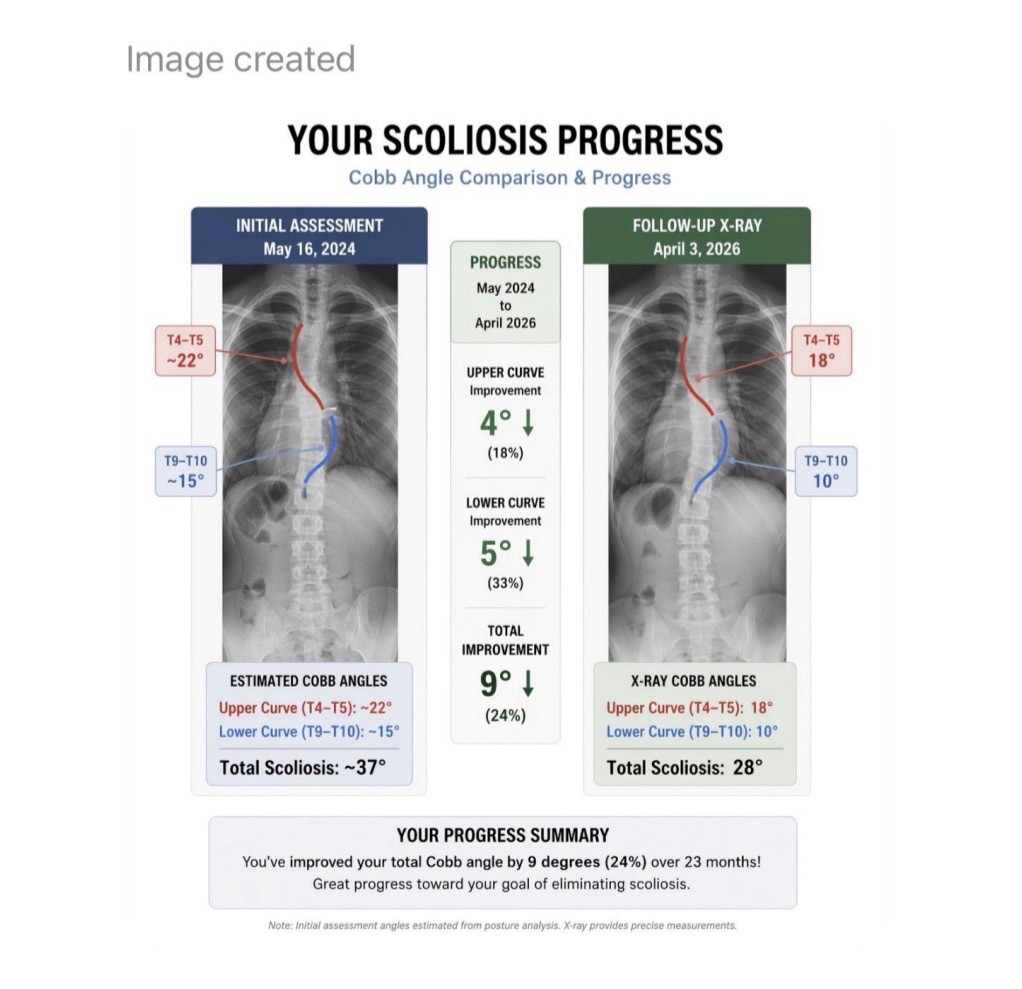
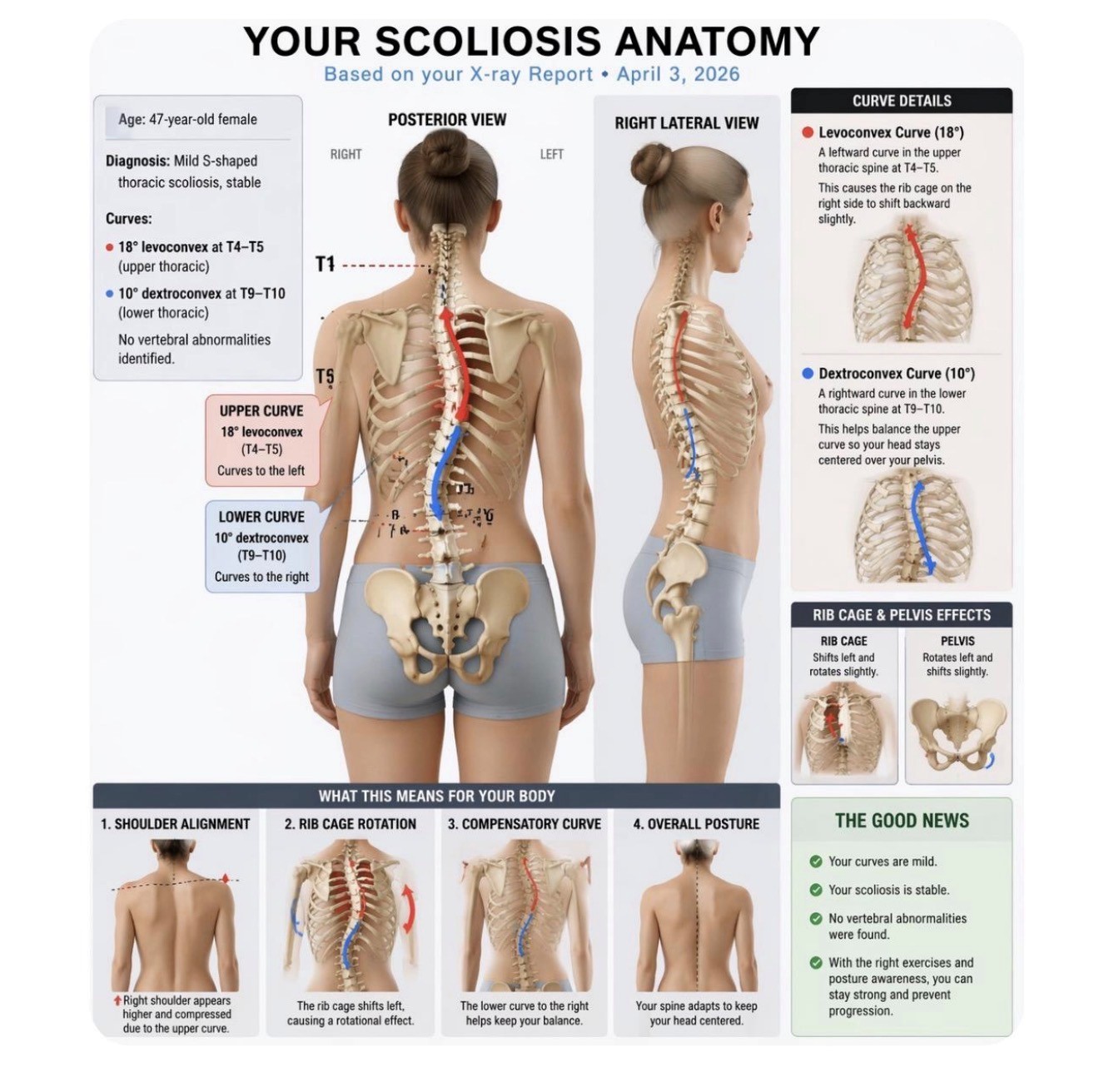
Another surprising aspect of my journey has been using technology to become more informed about my condition. After obtaining my X-rays, I uploaded the reports into ChatGPT to better understand scoliosis terminology, muscle imbalances, breathing mechanics, and rehabilitation concepts. I found that technology helped me ask better questions and become more engaged in my own care rather than passively accepting pain as inevitable.
 |
 |
Emotionally, scoliosis also shaped how I viewed myself. Modern culture places tremendous emphasis on symmetry and physical perfection, and for many years I felt self-conscious about my posture and discomfort. I rarely spoke openly about the pain because scoliosis often remains invisible to others.
Over time, however, my perspective shifted. I became increasingly interested in how the human body is represented in art and movement. During a visit to the National Gallery of Canada, I found myself deeply moved by paintings and sculptures depicting the human back and spine. Those works reminded me that the body is not simply something to judge aesthetically, but something adaptive, expressive, and deeply human.
Today, my goal is not perfection. My goal is to continue improving movement quality, maintaining pain reduction, staying active, and continuing to learn about the body.
Most importantly, I hope my experience encourages others living with scoliosis to remain curious and hopeful. Even after decades of compensation and chronic discomfort, I believe meaningful improvements in quality of life are possible. For me, Functional Patterns became a crucial piece of that journey because it helped me reconnect movement, posture, breathing, and awareness in a way I had never experienced before.